About Rossitten
Rossitten, currently known as Rybachy, is situated on the Kurische Nehrung (Courian Split) which is separated on one side by the Baltic Sea and on the other side by a salt water lagoon (Kurisches Haff). The Kurische Nehrung is ninety-eight kilometers (61 miles) long and three and one-half kilometers (2 miles) wide at its widest point. Rossitten is located on the widest portion of the Kurische Nehrung. The Kurische Nehrung is a valued nature paradise. Sand dunes in some places are as high as sixty meters (197 feet) hovering above the Baltic Sea. Two-thirds of the Kurische Nehrung is covered by forest, primarily pine trees (kiefern) and oaks. The area was also known for the habitats of the beautiful elks.
Rossitten is one of many small fishing villages on the Kurische Nehrung. However, it differs from other villages in that the land was extremely fertile growing potatoes, rye, and oats. In addition to agriculture, fishery, and tourism, Rossitten was also well known for its glider school (Segelfliegerschule) – building gliders, and teaching glider enthusiasts. Many competitions among gliders were performed off of the dunes of Rossitten. The high dunes, referred to by many as the German Sahara, and the wind from the lagoon contributed to a successful sport in gliding. The glider school in Rossitten was established in the 1920s. In 1924 the local gliding school became part of the Rhoen-Rossitten Society, a German gliding organization. The Segelfliegerschule was the first in the world that was officially recognized.
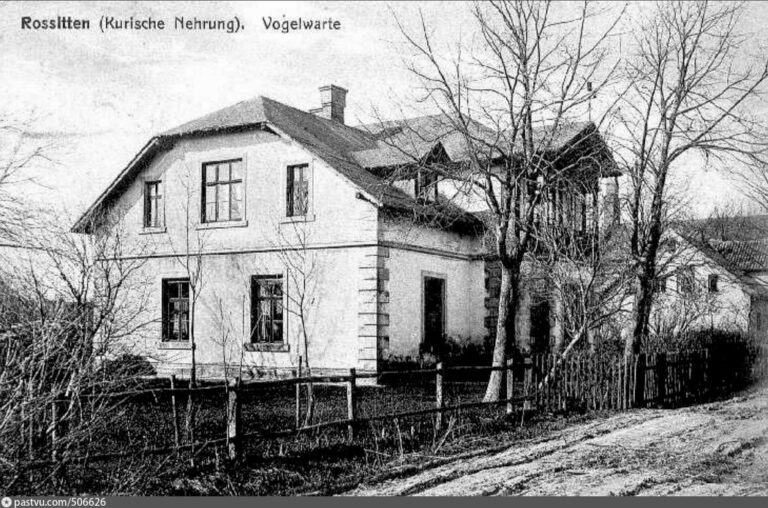
In 1901, Professor Dr. J. Thielemann founded the world’s first bird observatory (Vogelwarte) in Rossitten. It was in existence from 1901 to 1944. The observatory was reestablished in 1956 by Lev Belopolsky. To this day it is still in existence under the name Rybachy Biological Station which continues research on bird migration.
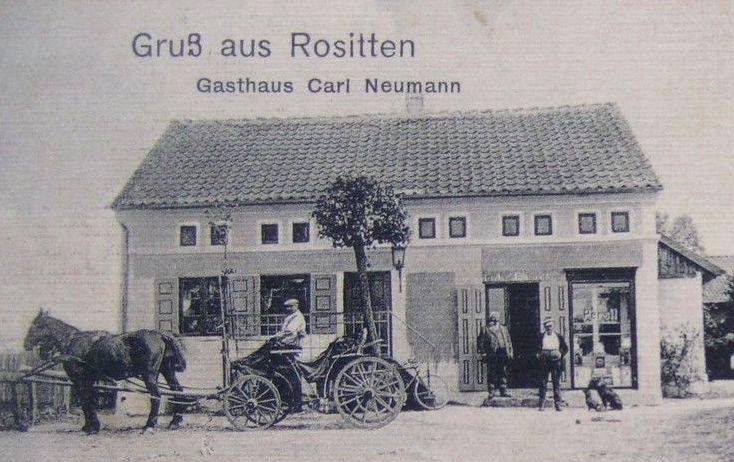
The Kurische Nehrung with its beautiful, magnificent dunes, and its spectacular and unusual sceneries, drew many tourists from all over the world. Tourists arrived mainly by boat which anchored on the mole (pier). The village itself had a church, school, grocery stores, a bakery, and of course the famous Kurhaus for summer guests where they could relax and enjoy themselves by listening to music, dancing, and interaction with guests and locals alike.
The air was filled with a variety of smells, salt from the Baltic Sea, the scent from the pine trees and occasionally, the smell of smoke where women smoked the famous flounders and eels. Hence, walking through the village one could feel the excitement, the joy, and the happiness of summer guests experiencing this extraordinary beautiful paradise called Rossitten.
Our mother was a remarkable lady. Anyone who came in contact with her noted her regal, elegant appearance. She possessed an inner strength unsurpassed by anyone I know. This enduring strength and her faith in God helped her survive many traumatic adversities in her lifetime. She never imagined what life had in store for her while she was experiencing carefree, happy years growing up in Rossitten, East Prussia. Rossitten, yes, this was a very special place indeed. Rossitten, East Prussia, her home, which she has loved to her dying days.
Helga